How we found out
From a “hotbox” in 1824 to a curve on a volcano and a panel of the world’s scientists.
Joseph Fourier
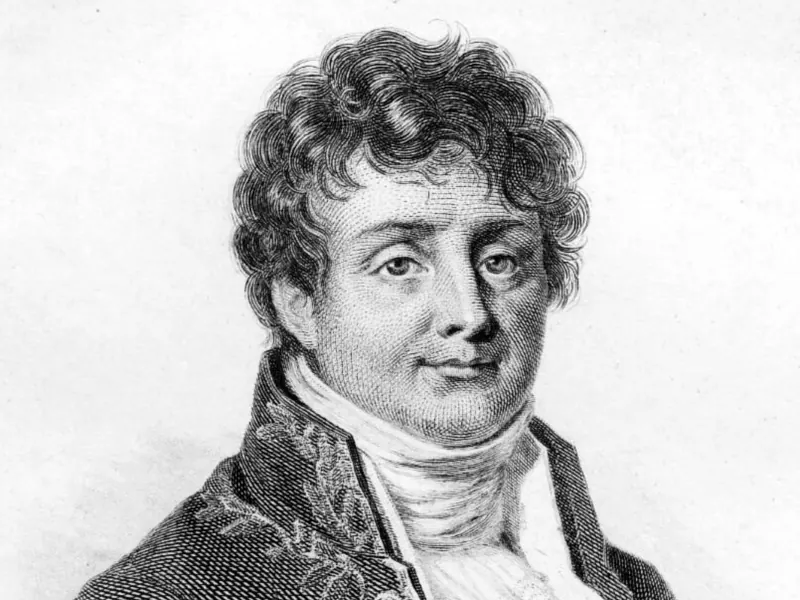
Joseph Fourier is sometimes credited with the idea, after comparing the atmosphere in 1824 to an insulated glass-lidded “hotbox”, though he never used the term greenhouse effect. Encyclopaedia Britannica: greenhouse effect
John Tyndall
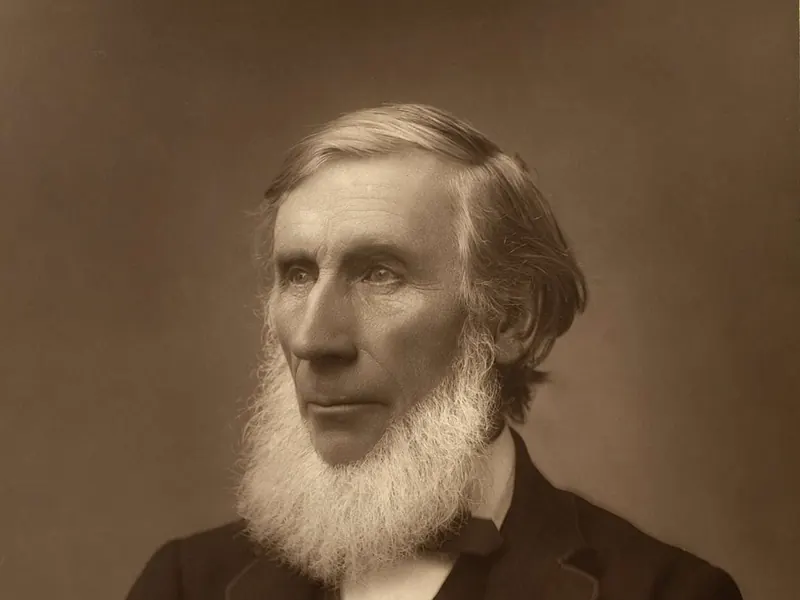
Irish physicist John Tyndall (1820–1893) found that water vapour and carbon dioxide absorb much more radiant heat than the other gases of the air. Encyclopaedia Britannica: John Tyndall
Tyndall became professor of natural philosophy at the Royal Institution in London in 1853 and was a friend of Michael Faraday. Encyclopaedia Britannica: John Tyndall
Tyndall also showed that the sky is blue because molecules in the air scatter the Sun’s rays. Encyclopaedia Britannica: John Tyndall He was a daring mountaineer. Encyclopaedia Britannica: John Tyndall
Scientists showed in the mid-19th century that carbon dioxide and other gases trap heat. NASA Science: Evidence
Svante Arrhenius
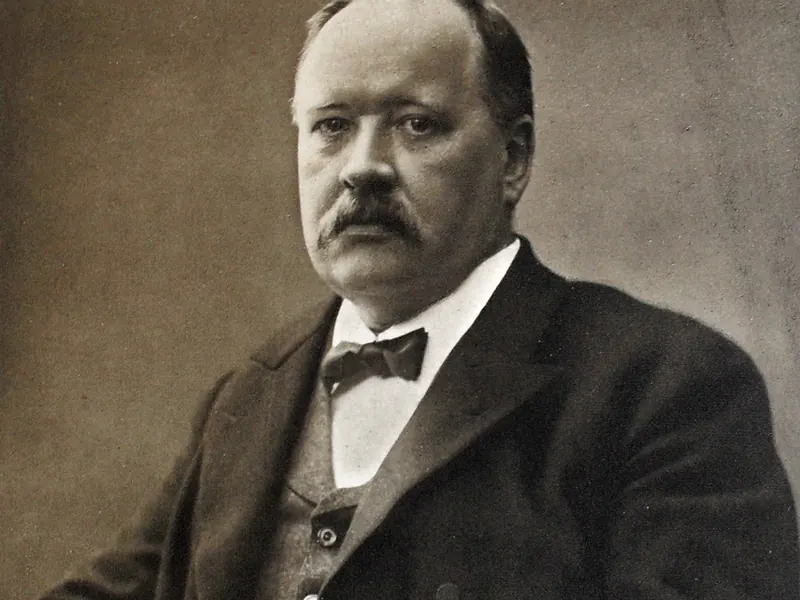
Swedish scientist Svante Arrhenius built the first climate model of the effect of carbon dioxide, published in 1896. Encyclopaedia Britannica: Svante Arrhenius He came to it through debates about what caused the ice ages. Encyclopaedia Britannica: Svante Arrhenius
Arrhenius predicted that fossil fuel burning alone would take 500 years to double carbon dioxide, and that doubling it would warm Earth by 3 to 4 °C. Encyclopaedia Britannica: Svante Arrhenius
Arrhenius won the Nobel Prize for Chemistry in 1903. Encyclopaedia Britannica: Svante Arrhenius
Charles David Keeling
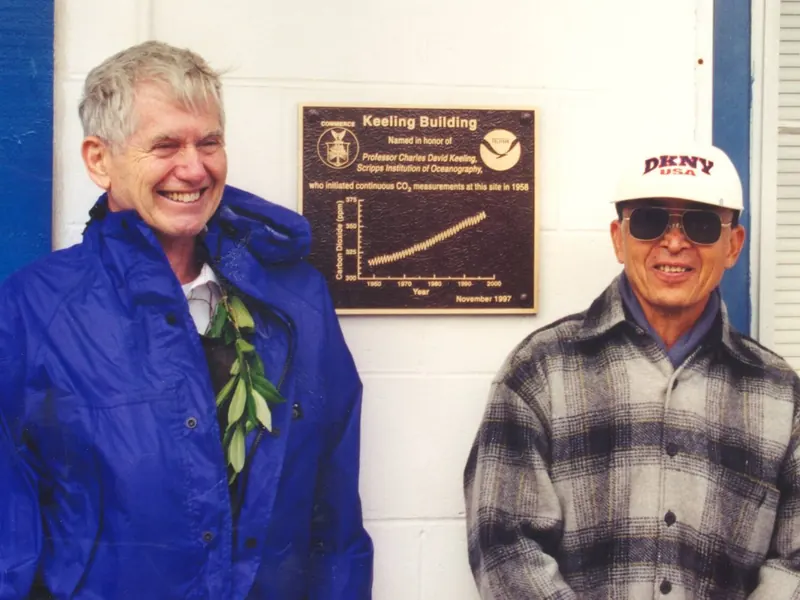
The Keeling Curve, devised by Charles David Keeling of the Scripps Institution of Oceanography, charts carbon dioxide at Mauna Loa since 1958. Encyclopaedia Britannica: Keeling Curve It is the longest unbroken instrument record of carbon dioxide in the world. Encyclopaedia Britannica: Keeling Curve
The IPCC
The IPCC was set up in 1988 by the UN Environment Programme and the World Meteorological Organization, and is based in Geneva. Encyclopaedia Britannica: Intergovernmental Panel on Climate Change The IPCC does no research of its own: it gathers and assesses work by hundreds of scientists from around the world. Encyclopaedia Britannica: Intergovernmental Panel on Climate Change
Between 1990 and 2021 the IPCC released six main assessment reports. Encyclopaedia Britannica: Intergovernmental Panel on Climate Change In 2007 the IPCC shared the Nobel Peace Prize. Encyclopaedia Britannica: Intergovernmental Panel on Climate Change
The Intergovernmental Panel on Climate Change (IPCC) was set up in 1988 to give governments the information they need to tackle climate change. Met Office: What is climate change?
The timeline
- 1824 Joseph Fourier compares the atmosphere to a glass-lidded “hotbox”. Joseph Fourier is sometimes credited with the idea, after comparing the atmosphere in 1824 to an insulated glass-lidded “hotbox”, though he never used the term greenhouse effect. Encyclopaedia Britannica: greenhouse effect
- 1853 John Tyndall becomes professor at the Royal Institution. Tyndall became professor of natural philosophy at the Royal Institution in London in 1853 and was a friend of Michael Faraday. Encyclopaedia Britannica: John Tyndall
- 1896 Svante Arrhenius publishes the first climate model of carbon dioxide. Swedish scientist Svante Arrhenius built the first climate model of the effect of carbon dioxide, published in 1896. Encyclopaedia Britannica: Svante Arrhenius
- 1903 Arrhenius wins the Nobel Prize for Chemistry. Arrhenius won the Nobel Prize for Chemistry in 1903. Encyclopaedia Britannica: Svante Arrhenius
- 1958 The Keeling Curve begins at Mauna Loa, Hawaii. The Keeling Curve, devised by Charles David Keeling of the Scripps Institution of Oceanography, charts carbon dioxide at Mauna Loa since 1958. Encyclopaedia Britannica: Keeling Curve
- 1988 The IPCC is set up. The IPCC was set up in 1988 by the UN Environment Programme and the World Meteorological Organization, and is based in Geneva. Encyclopaedia Britannica: Intergovernmental Panel on Climate Change
- 1992 The Earth Summit in Rio de Janeiro. The process goes back to the 1992 Earth Summit in Rio de Janeiro, where countries joined the UN Framework Convention on Climate Change. Encyclopaedia Britannica: Paris Agreement
- 1997 The Kyoto Protocol is adopted. The Kyoto Protocol, adopted in Kyoto, Japan, in December 1997, aimed to cut emissions of six greenhouse gases. Encyclopaedia Britannica: Kyoto Protocol
- 2005 The Kyoto Protocol comes into force. It came into force in February 2005. Encyclopaedia Britannica: Kyoto Protocol
- 2007 The IPCC shares the Nobel Peace Prize. In 2007 the IPCC shared the Nobel Peace Prize. Encyclopaedia Britannica: Intergovernmental Panel on Climate Change
- 2015 The Paris Agreement is adopted. The Paris Agreement was adopted in Paris in December 2015, and was meant to improve on and replace the Kyoto Protocol. Encyclopaedia Britannica: Paris Agreement
- 2016 The Paris Agreement comes into force. The Paris Agreement came into force on 4 November 2016 and is a legally binding international treaty. United Nations: The Paris Agreement
- 2021 The IPCC says human activity is unequivocally the cause. The IPCC’s 2021 report says human activity is unequivocally the cause of climate change. Met Office: What is climate change?
- 2023 The first global stocktake finishes at COP28. The first “global stocktake” of progress finished at COP28 in 2023, with a call to speed up the move from fossil fuels to renewables such as wind and solar. United Nations: The Paris Agreement
- 2024 The hottest year in NASA’s record. Since record-keeping began in 1880, the hottest year in NASA’s record is 2024. NASA: Global temperature (vital sign)
Think you’ve got it? Try the Climate Timeline game.
Next: Kyoto and Paris →