What is climate change doing?
Warmer oceans, higher seas, thinner ice, and nature on the move.
Climate change is already having visible effects: the Earth is warming, rainfall patterns are changing and sea levels are rising. Met Office: Effects of climate change
The oceans take the heat
The oceans take up 90% of the extra heat caused by people. Met Office: Effects of climate change NOAA estimates the ocean is storing about 91% of the excess heat trapped by extra greenhouse gases. NOAA Climate.gov (archived June 2025): Ocean heat content
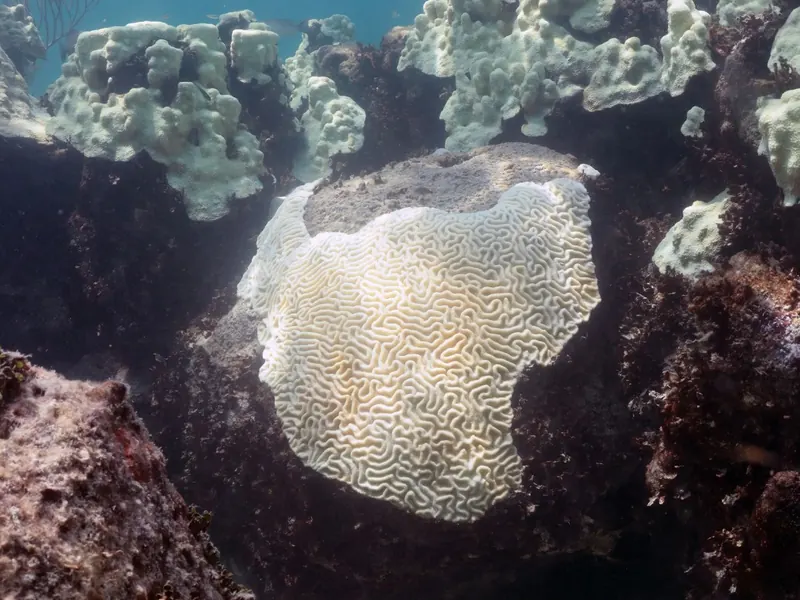
The oceans also take up around 25% of the carbon dioxide people release, which makes the water more acidic. Met Office: Effects of climate change Since the Industrial Revolution the pH of the ocean’s surface has dropped from 8.21 to 8.10, making it harder for sea creatures to build shells and skeletons. NOAA Climate.gov (archived June 2025): Atmospheric carbon dioxide
Rising seas
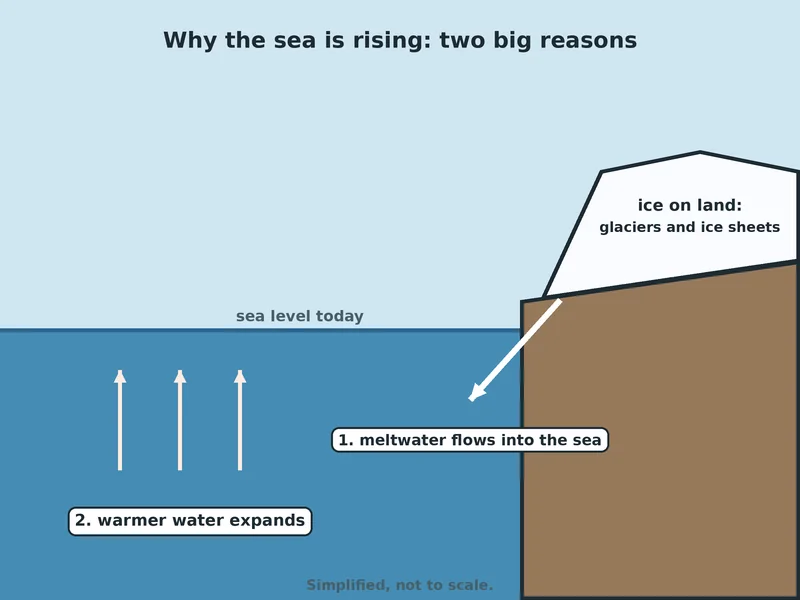
Seawater expands as it warms, so a warmer ocean takes up more room and the sea rises. Meltwater from ice on land adds more. Met Office: Effects of climate change
Between 1901 and 2018 the global average sea level rose by around 20 centimetres. Met Office: Effects of climate change NOAA puts the rise since 1880 at 21–24 centimetres. NOAA Climate.gov (archived June 2025): Global sea level
Sea level rise is speeding up: from 1.4 mm a year through most of the 20th century to 3.6 mm a year in 2006–2015. NOAA Climate.gov (archived June 2025): Global sea level
In 2023 global average sea level set a record, 101.4 mm above 1993 levels. NOAA Climate.gov (archived June 2025): Global sea level
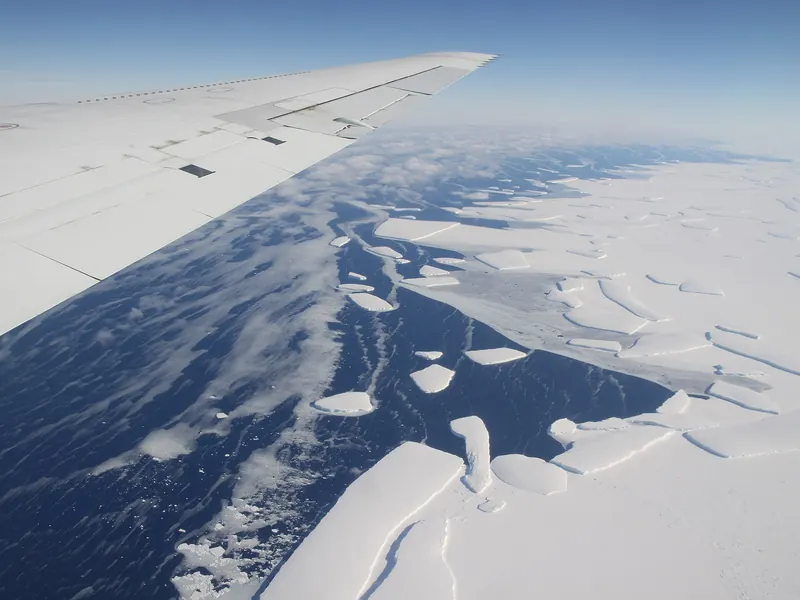
Melting glaciers and ice sheets are the biggest cause of sea level rise in recent decades. NOAA Climate.gov (archived June 2025): Mountain glaciers
Nearly 4 in 10 people (39%) live within 100 kilometres of a shoreline. Met Office: Effects of climate change
Melting ice
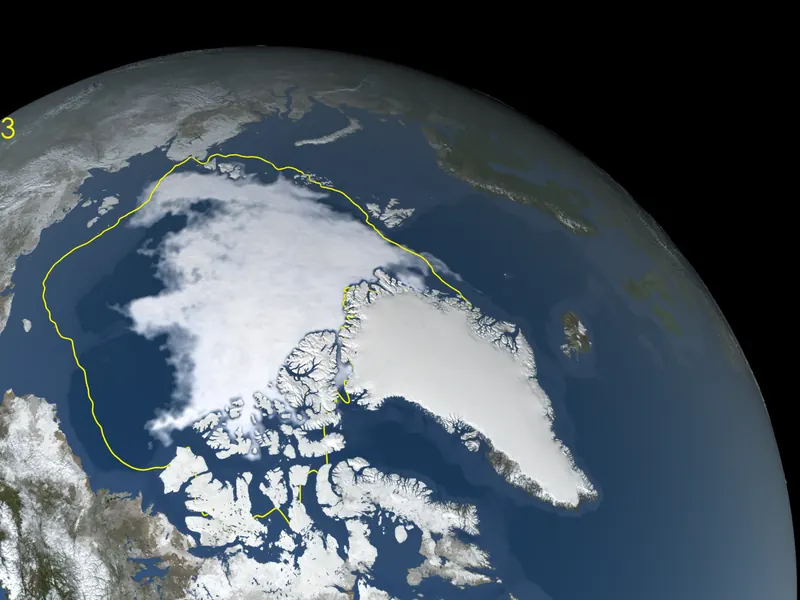
The poles warm faster than other places: less ice means less sunlight reflected back to space, so the area heats up and more ice melts. Met Office: Effects of climate change
Arctic sea ice is at its largest in March and its smallest in September. NOAA Climate.gov (archived June 2025): Arctic sea ice Between 1979 and 2024, end-of-summer Arctic sea ice shrank by 12.1% per decade compared with the 1981–2010 average. NOAA Climate.gov (archived June 2025): Arctic sea ice
In September 2024 Arctic sea ice covered 4.38 million square kilometres, sixth lowest in the satellite record. NOAA Climate.gov (archived June 2025): Arctic sea ice
Arctic ice is already 65% thinner than it was in 1975. Met Office: Effects of climate change Ice more than four years old, the thick ice, is now only 5% of what there was in the 1980s. NOAA Climate.gov (archived June 2025): Arctic sea ice
Late-summer Arctic sea ice is the smallest it has been in at least 1,000 years. Met Office: Effects of climate change Without soon cutting emissions, the Arctic could have ice-free summers by the middle of this century. Met Office: Effects of climate change
Glaciers and snow
The reference glaciers watched by the World Glacier Monitoring Service lost ice for the 37th year in a row in 2023/24. NOAA Climate.gov (archived June 2025): Mountain glaciers Since 1970 those glaciers have lost the same as slicing about 30 metres of ice off the top of each one. NOAA Climate.gov (archived June 2025): Mountain glaciers
Spring snow is melting earlier: late-spring snow cover has been above average only 5 times in the past 25 years. NOAA Climate.gov (archived June 2025): Snow cover
Heat and rain
2015, 2016, 2017, 2018, 2019 and 2020 were among the hottest years ever recorded, and heatwaves have become more likely as the planet warms. Met Office: Effects of climate change
Warmer air holds more water, so rainfall is increasing on average across the world, though some places get less. Met Office: Effects of climate change
The IPCC expects the global average temperature to reach or pass 1.5 °C within the next few decades. NASA Science: Effects
Nature on the move
Plants and animals are shifting where they live, river and lake ice breaks up earlier, and plants and trees are flowering sooner. NASA Science: Effects
Next: the UK →